Who is this bundle for?
It is for sonic explorers, musicians and producers who enjoy fresh processing concepts and want tools that sound distinct without requiring complex setup.

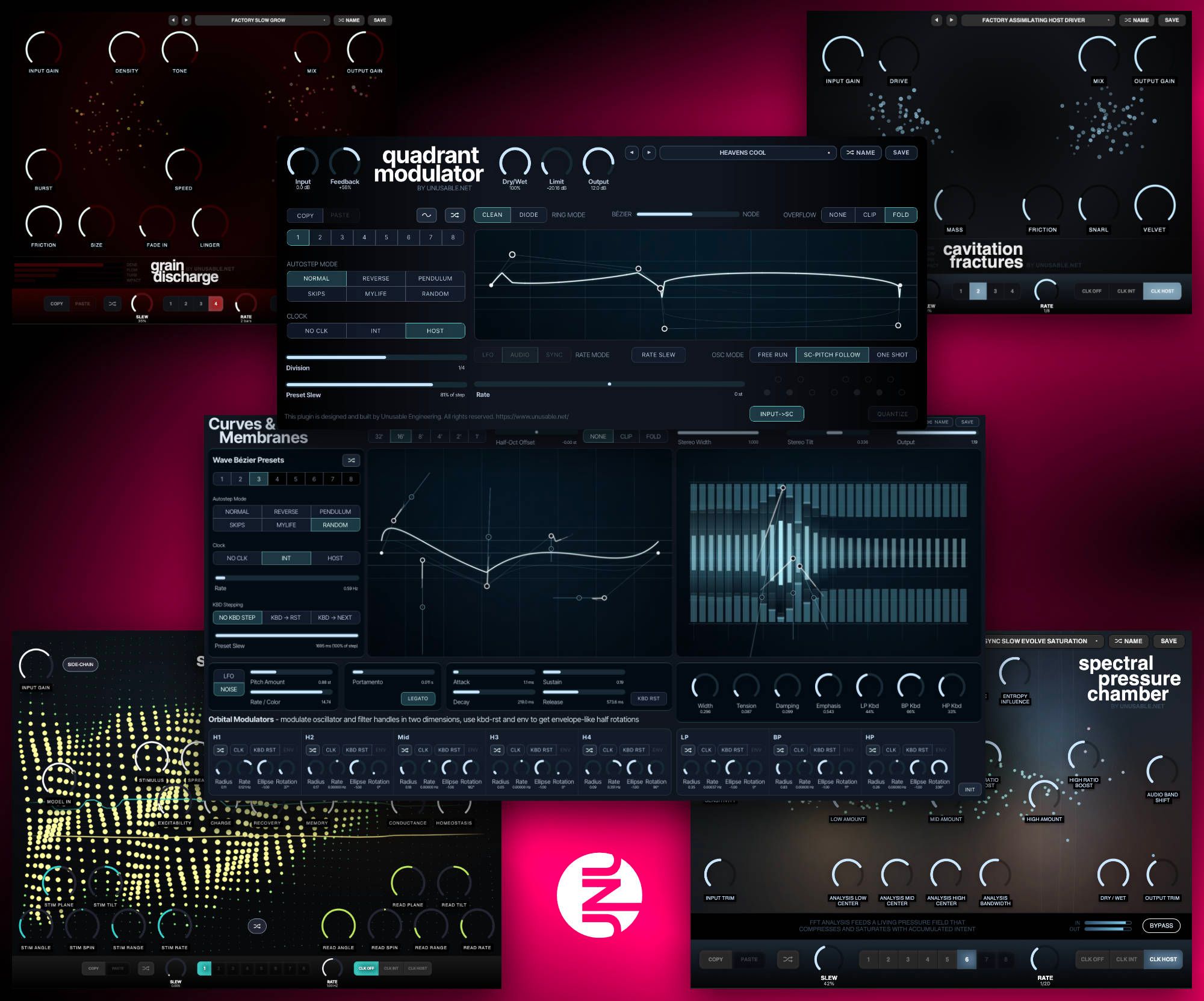
The science-metaphor lineup: Curves & Membranes, Quadrant Modulator, Spectral Pressure Chamber, Cavitation Fractures, Grain Discharge, and Synaptic Resonance.
Scientist Suite contains the plugins where I have used something from science or mathematics as the starting point for making an instrument or effect. Sometimes the connection is quite direct, and sometimes it became rather loose during development. It includes Curves & Membranes, Quadrant Modulator, Spectral Pressure Chamber, Cavitation Fractures, Grain Discharge, and Synaptic Resonance. So there is a synthesizer, a four-quadrant modulator, compression and saturation, distortion, granular processing, and a neural vocoder-like resonator. They are different tools, but they come from the same habit of finding some system I find interesting and then seeing what happens when sound is sent through it.
Curves & Membranes lets you draw a waveform and move through different versions of it, with orbital modulation around the points and three different 32-band filter models. Quadrant Modulator takes the same visual oscillator and uses it for four-quadrant or amplitude modulation. It can run freely, follow the pitch of the input, or play the waveform once as a rather strange envelope. Spectral Pressure Chamber divides the signal into chambers where pressure can build up and move before the compression and saturation happen. Cavitation Fractures uses fluid-like events for distortion, and Grain Discharge uses related events to release grains from the recent input. Synaptic Resonance has a neural-style lattice that reacts to the sound and controls a set of tuned resonant bands. You can see most of these systems moving while they work, which is useful, but also occasionally quite distracting.
You can use them for quite normal things. Curves & Membranes makes basses, leads, string-like sounds and drones. Spectral Pressure Chamber can be a multiband compressor, Cavitation Fractures can distort a drum loop, and Grain Discharge can turn a short sound into a longer texture. But I think they are most interesting when the internal system becomes part of how you play or arrange the sound: letting pressure move between bands, making fluid events change the rhythm of the distortion, following a melody with Quadrant Modulator, or driving Synaptic Resonance from a side-chain. The controls are kept reasonably direct even when quite a lot is happening underneath. I prefer that to having every possible connection available in a modulation matrix, though I accept that other people may be less suspicious of modulation matrices than I am.
It is for sonic explorers, musicians and producers who enjoy fresh processing concepts and want tools that sound distinct without requiring complex setup.
It combines a new synthesis voice with scientific metaphor effects, so you can design both source tone and processing character from one philosophy.
The gap you didn't know you had... ;) It provides an immediate route to expressive, modern textures that are hard to get from traditional plugin chains.
It is both. The internals are unconventional, but the interfaces are built for ease of use.
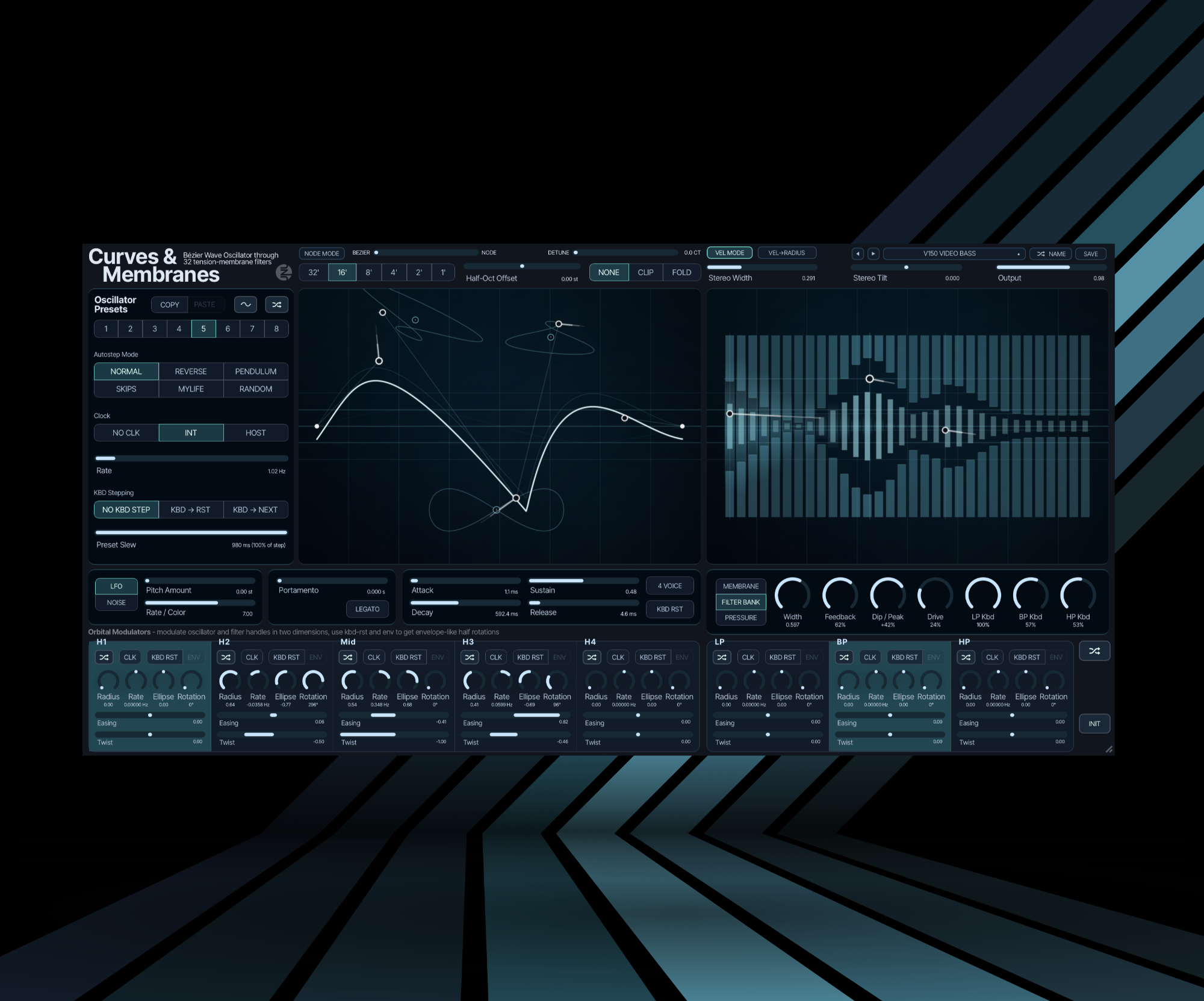
A visual one-oscillator synth built around Bézier and node wave shaping, orbital motion, and a membrane-style filter model.
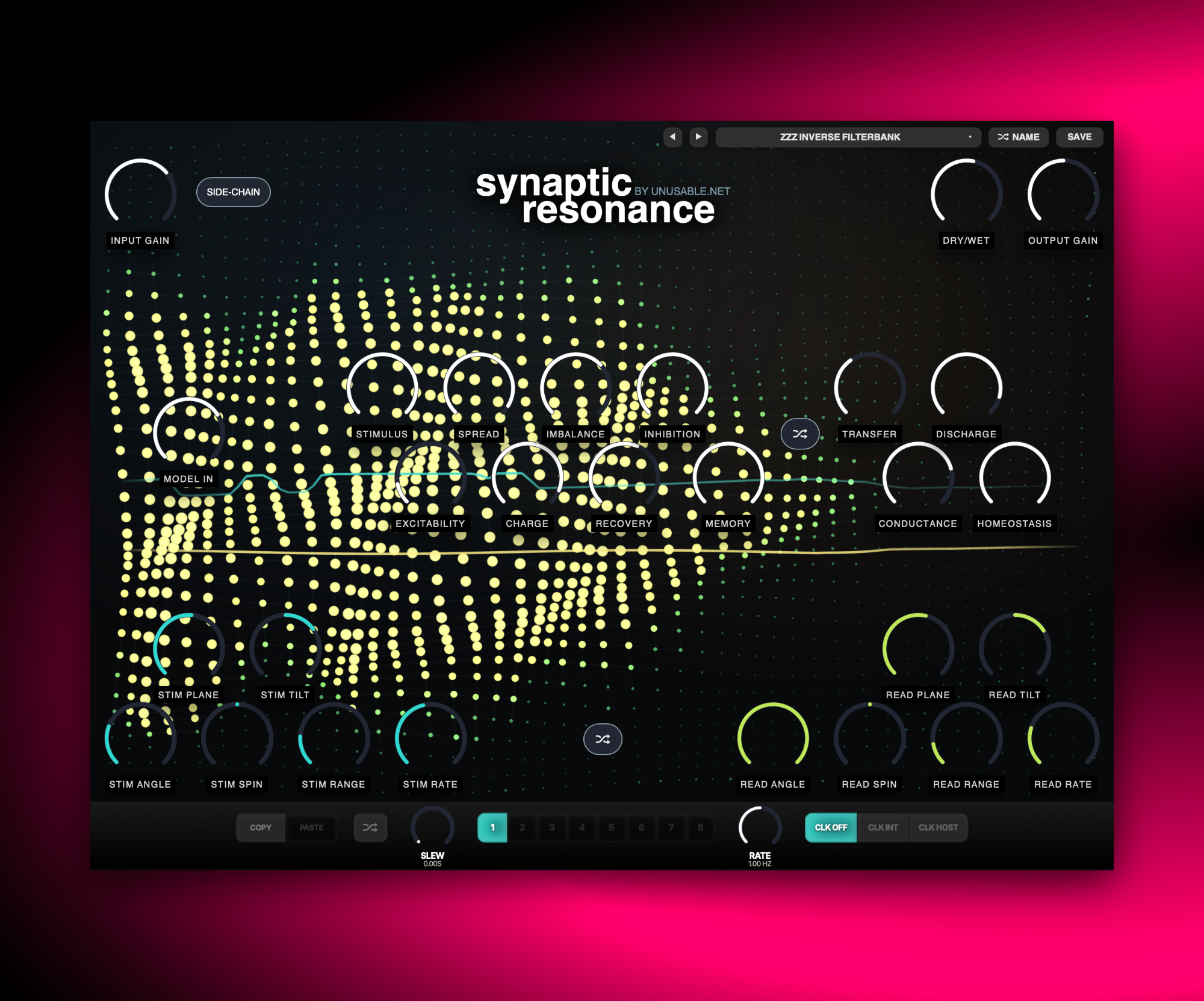
A neural vocoder-style effect where input signal excites a 2D simulation that drives a 40-band resonant filter bank.
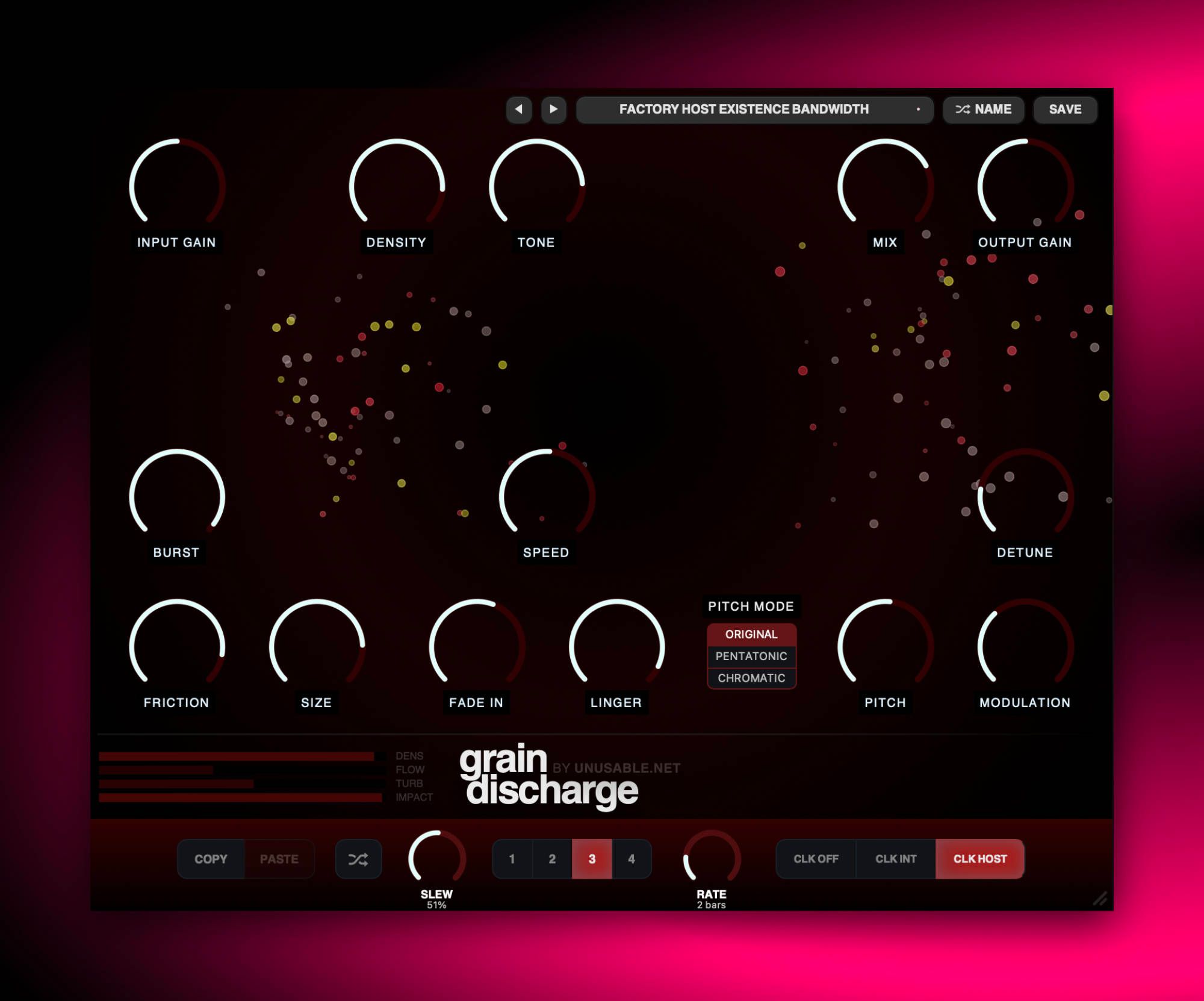
A cavitation-driven granular effect where fluid simulation events spawn grains from recent input audio history.
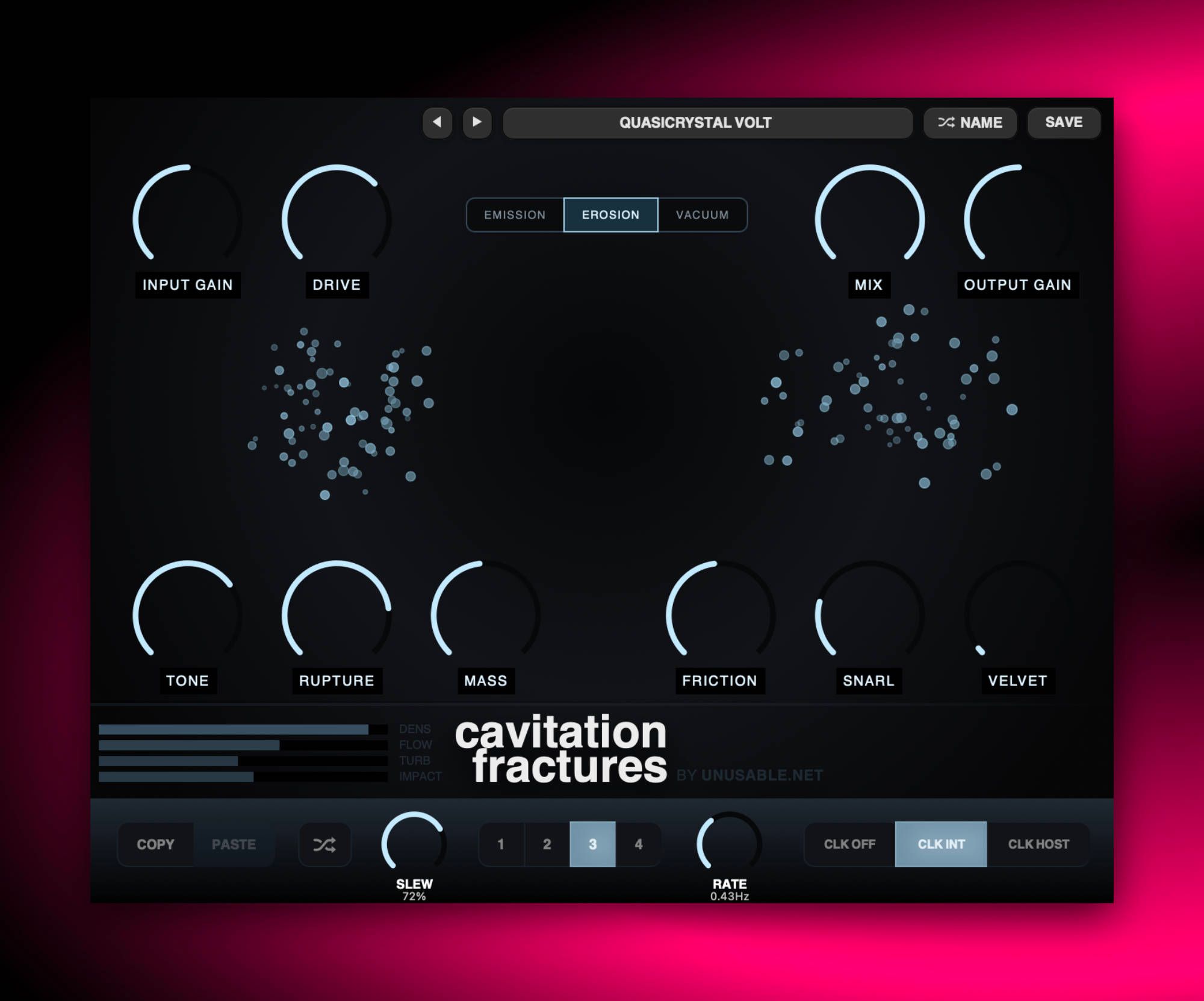
A fluid-dynamics processor that can add fracture, erode narrow bands, or pull event-shaped holes from the signal.
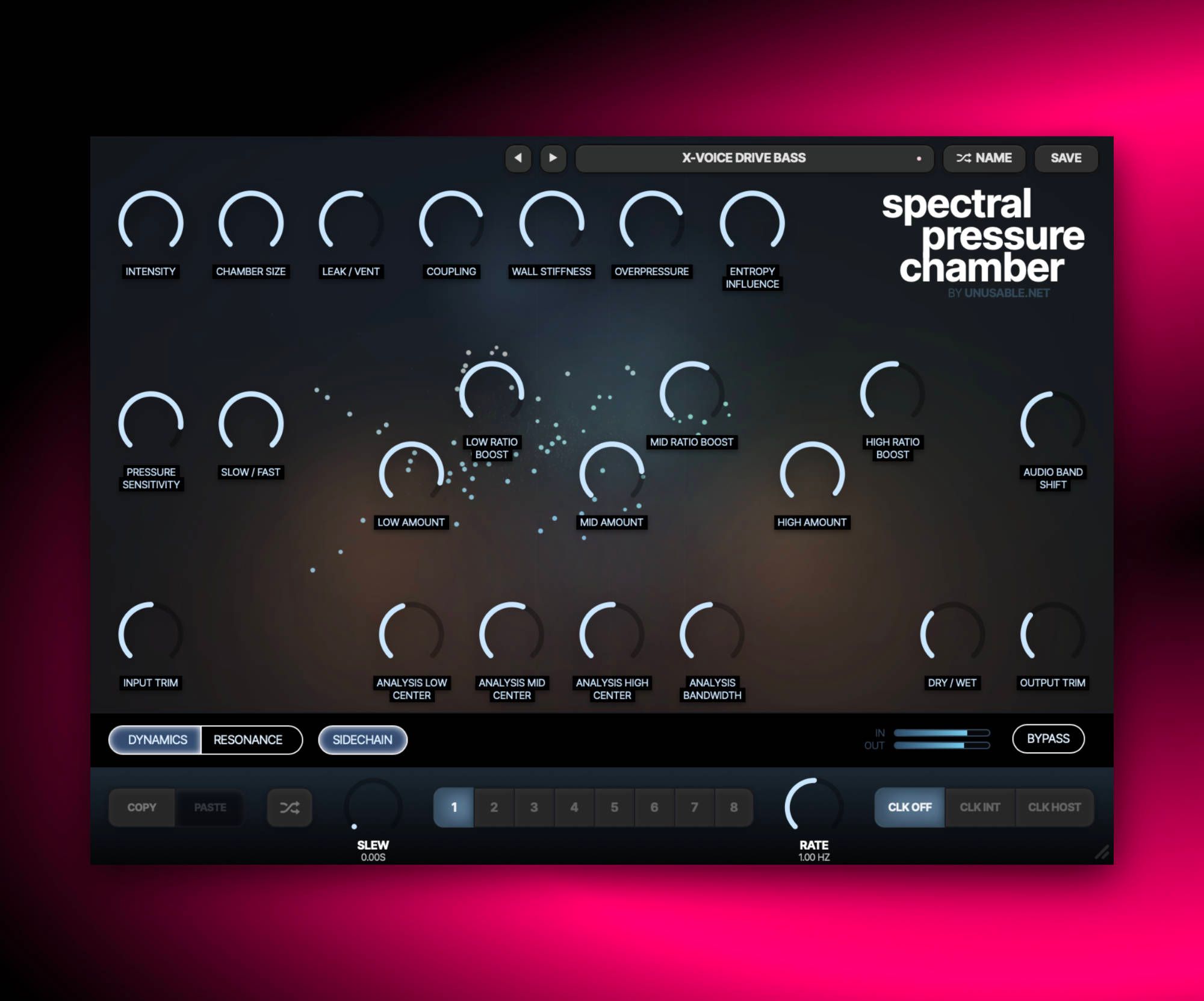
A thermodynamic multiband effect where spectral pressure drives dynamics, saturation, and resonance.
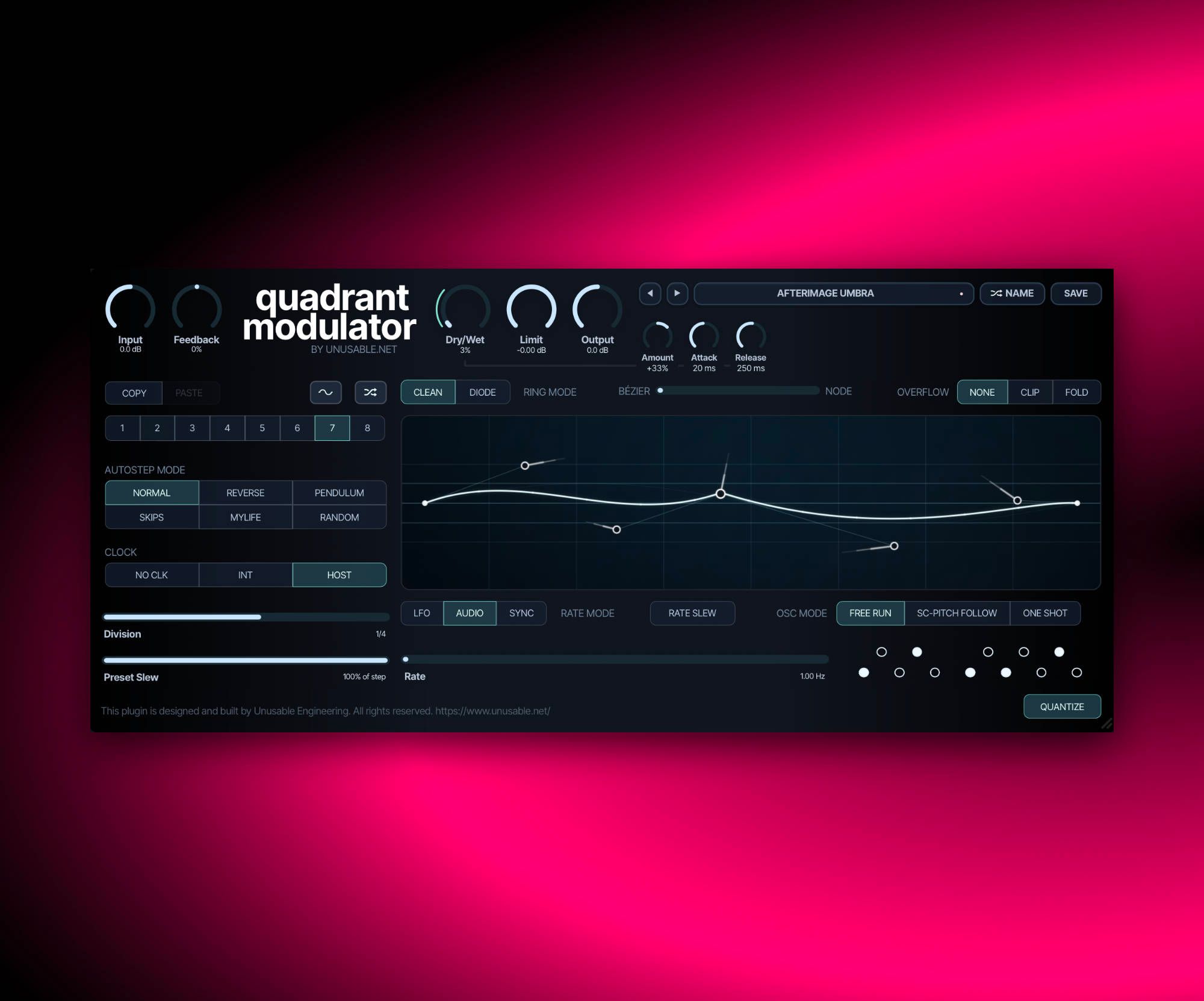
A four-quadrant multiplier with a bezier oscillator, pitch following, one-shot shaping, and an 8-slot waveform sequencer.
macOS 12+ AU/VST3 and Windows 10/11 VST3.
The plugins use detailed real-time processing and are happiest on reasonably recent CPUs, especially in larger sessions.
Science-native interfaces run live simulations while their windows are open. They are beautiful to watch and interact with, but closing windows you are not actively editing can save processing power for other hungry plugins.