Signal path and level controls
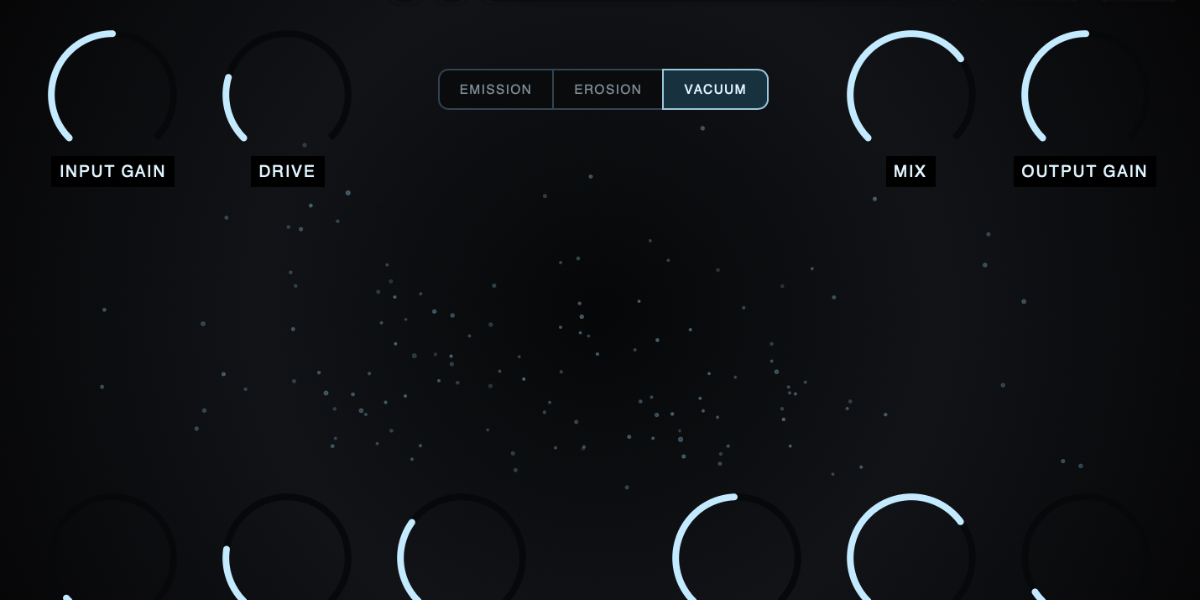
The input is split between the dry path and a 4x-oversampled wet path. The wet path detects incoming level and transients, generates cavitation events, applies the selected processing mode, then passes through tone shaping and output protection before the dry/wet blend.
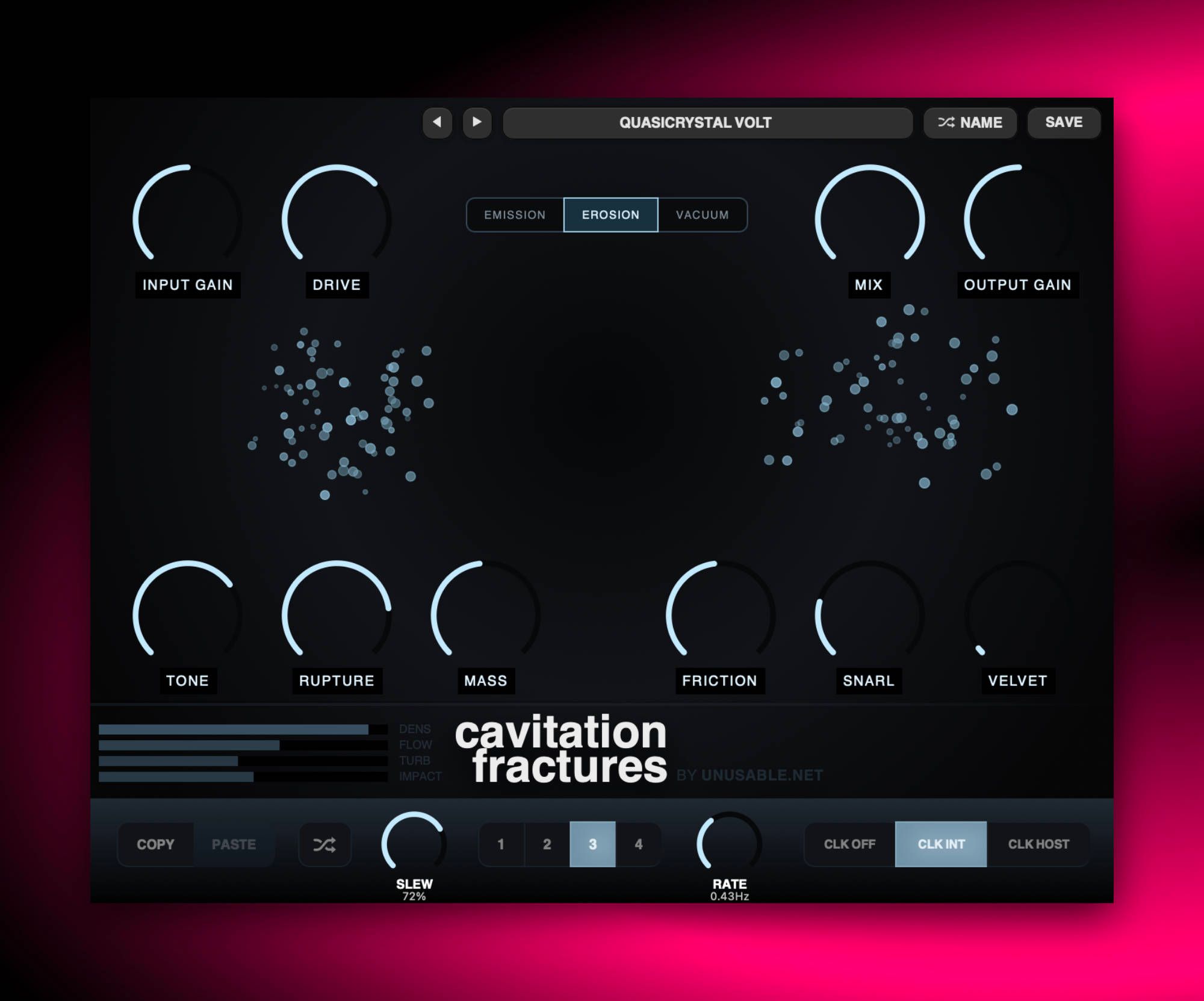
Input Gain changes the level entering the detector and wet processing. It therefore changes both distortion level and how readily the input triggers cavitation events.
Drive in Emission, increases gain into the asymmetric fold and saturation stages. In Erosion and Vacuum, it applies tube-style saturation before material is removed.
Tone tilts the processed spectrum. Negative values reduce high-frequency content and emphasize the lower body; positive values emphasize upper harmonics. It also changes the positive/negative asymmetry slightly.
Mix crossfades between the original input and the complete processed signal.
Output Gain changes the final level after the dry/wet blend and before the last soft limiter.