
All plugins have gotten updates.
The change affecting everything is that plugins now save the resize scale for each instance. So if you scale one up or down to fit your workflow, that instance will reopen at the same size after minimizing or closing the UI.
This was requested quite some time ago, and I kind of postponed it as I have managed to upscale plugin UIs in ways that made it impossible to downsize them again. But truth be told, that has not happened often enough to warrant the annoyance of the UI scaling back every time you reopen it.
Getting this into every plugin meant going through them one by one, checking that the shared component worked as it should and updating a few plugin-specific variables.
Kind of uninspiring repetitive work.
So I decided to give some of the plugins small upgrades while I was there. Mostly stuff I had thought about and noted down while working on other things.
Let’s quickly go through them, starting with the most fun ones.
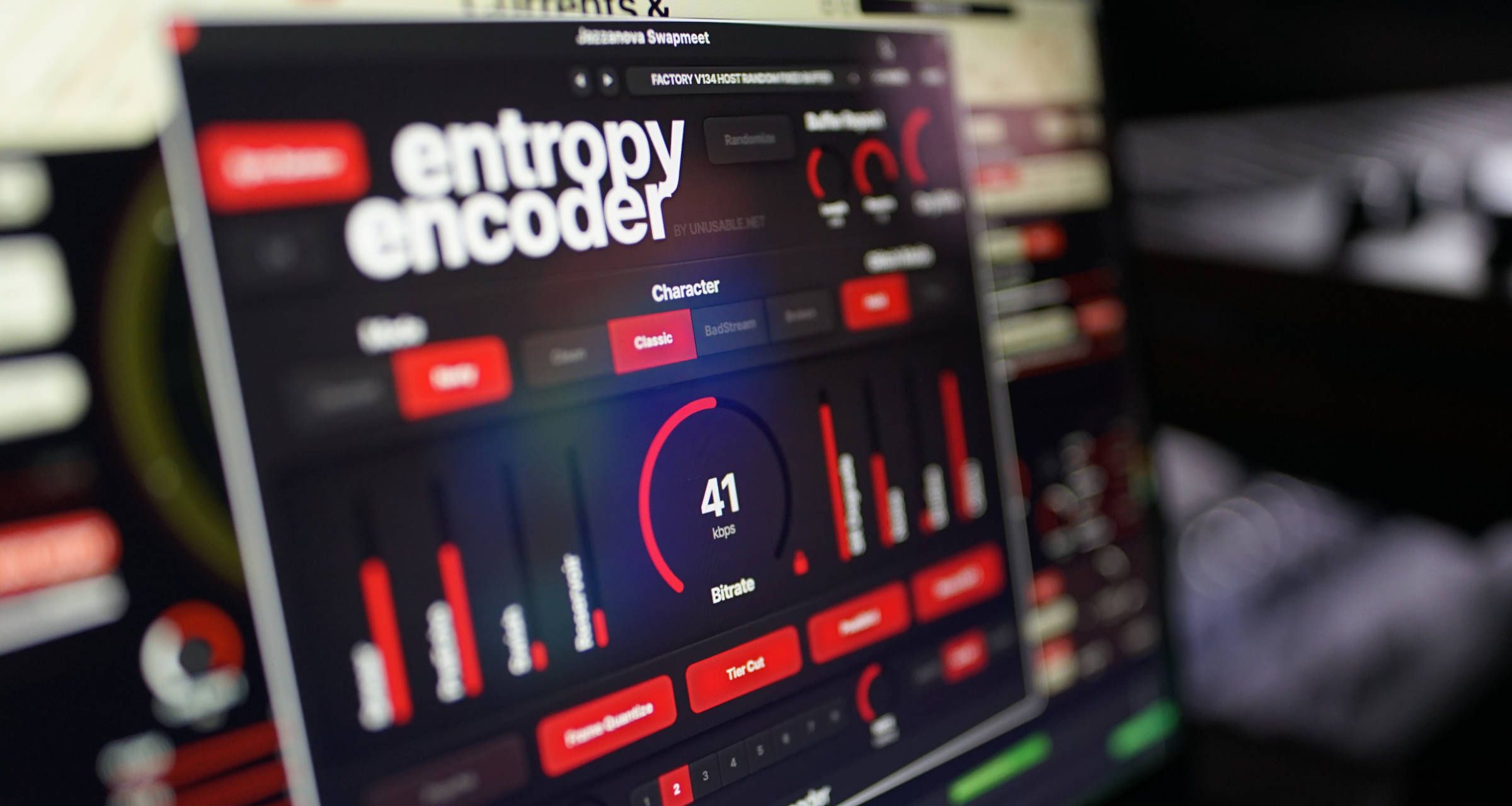
Entropy Encoder
I tightened up the top part of the interface to make room for two new controls: Buffer Length and Buffer Repeat.
So, what does the buffer repeater do?
It is basically an effect I used a lot back in the 00s. It loops a tiny fragment of audio a set number of times, then grabs a new fragment and does it again and again.
It can be clicky, sound like an old dial-up modem, sound like a broken CD player, etc.
It is positioned before the codec effect and does nothing until you turn Repeats up to 1 or more.
I decided not to have synced random or slot-sequencer random affect it, so you can easily keep the buffer fixed while everything else is changing.
It is possible to sequence it with the slot sequencer, but without slew. Changing the settings grabs a new buffer, and slewing did not work well with that.
It is great fun to sequence and run some drums or a whole mix through it, or just put a pad through it.
It is worth noting that the sample length shown is only technically correct at 48 kHz. I wanted the sound to stay the same at any sample rate, so the other sample rates are scaled. Mainly so changing sample rate does not suddenly change the sound.
Anyway, broken digital. You got it.
Spectral Pressure Chamber
While most of the other plugins have been refined over time, Spectral Pressure Chamber has stayed more or less unchanged.
I use it quite often, but I have not really had many ideas for things to add. To be sincere, it already has a shit-ton of controls and most of the time I just use the Random button.
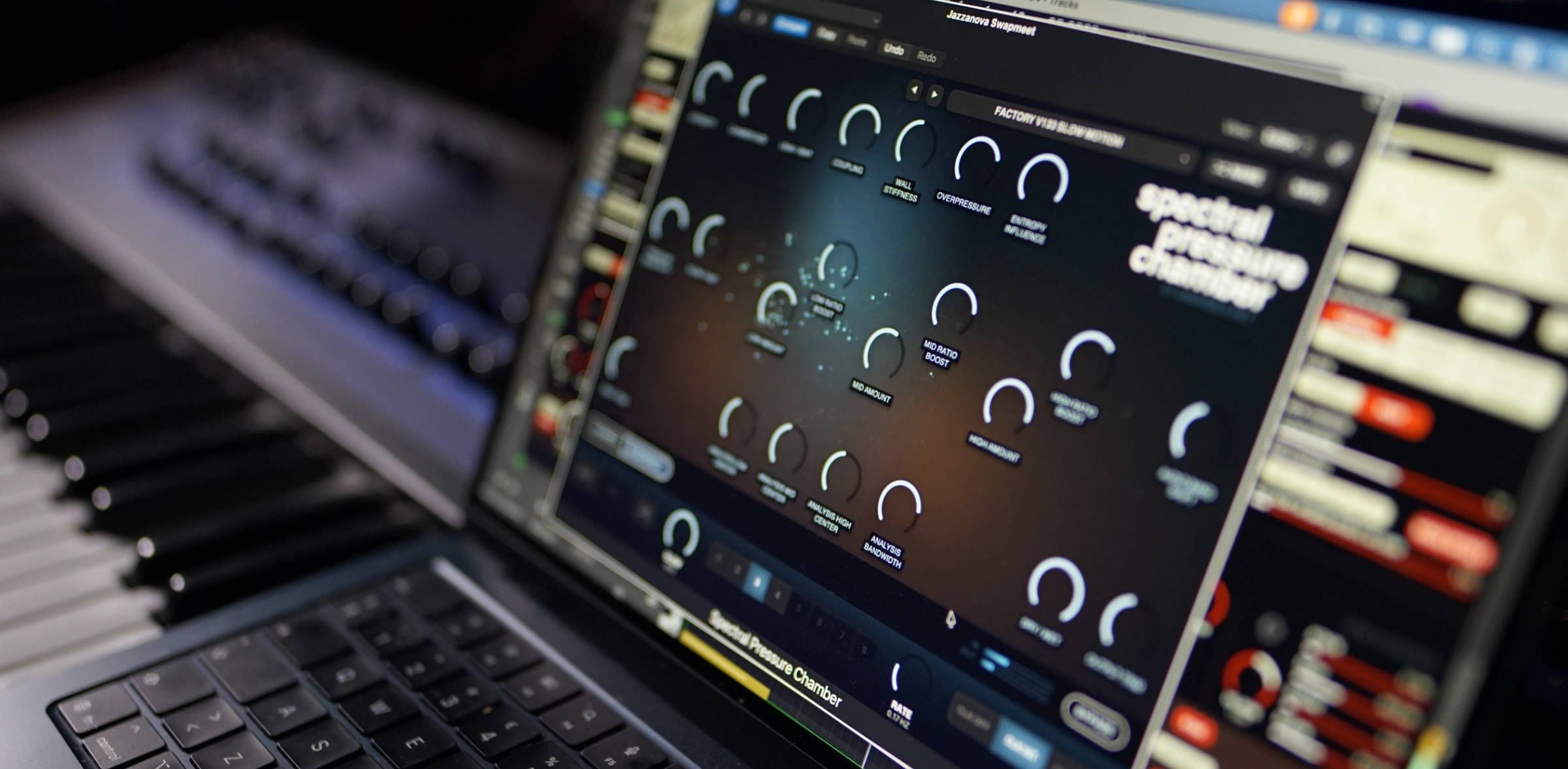
I cleaned up some of the most CPU-heavy parts and decided to try building a little three-band pressure-driven resonator.
It splits the audio into low, mid and high bands, then feeds each into a tuned feedback delay, technically a comb resonator.
These create ringing tones and sustain, with the pressure simulation influencing their response and decay.
So it generates a bit of phasy ringing in each band, and changing the controls affects resonator decay and tuning.
To activate it, change the mode on the left above the slot sequencer from Dynamics to Resonance.
Play with the audio band shifts and the band amount and boost settings and I am sure you’ll be pleasantly surprised.
It is a soft and sweet effect that seems to work well on most input I have given it so far.
One of the most fun things I tried was putting a full mix through it and automating the switch between Resonance and Dynamics mode.
The mode switch is not part of the slot-sequencer parameters, as that would make the effect overly CPU-heavy.
My final tip is to put it at 50% wet and play pads through it. It adds an instantly eerie atmosphere that is really unique.
Frequency Guillotine
This is one of the effects I use the most. Well, it is a software implementation of some of my favorite modular modules.
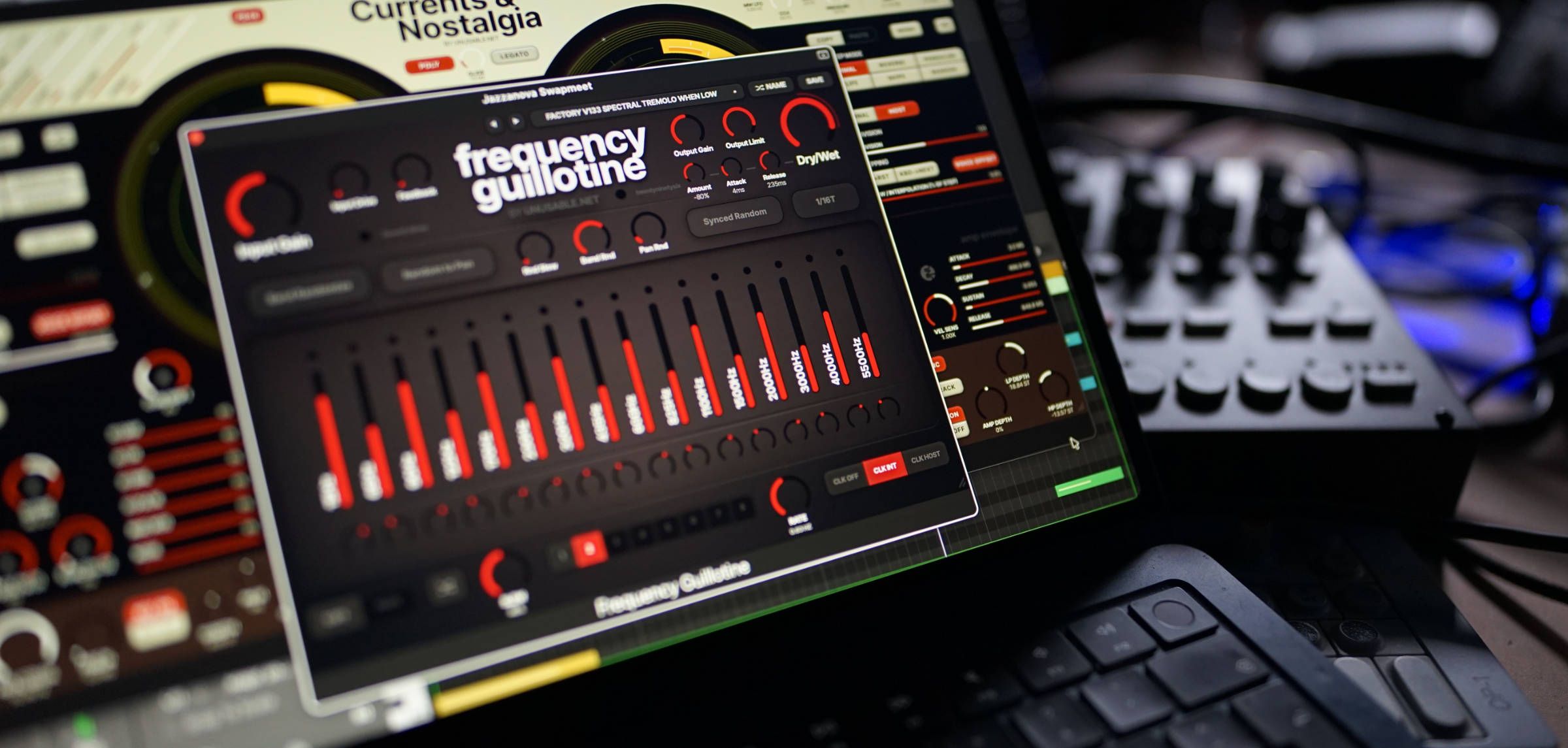
I was curious how it would react to adding the envelope follower for Dry/Wet from Residual Breakdown.
I think it turned out quite nice.
You can have sounds get wetter or drier as the incoming audio fades out.
So you can have one active slot, no level differences between the bands, just random panning, and let the sound spread across the spectrum as it dies out. Or the other way around.
It is one of those additions that keeps giving me ideas for things I want to try.
It also makes Frequency Guillotine a little closer to the way I work with hardware modular systems, where envelope followers are another favorite of mine.
The envelope follower is not controlled by the slot sequencer.
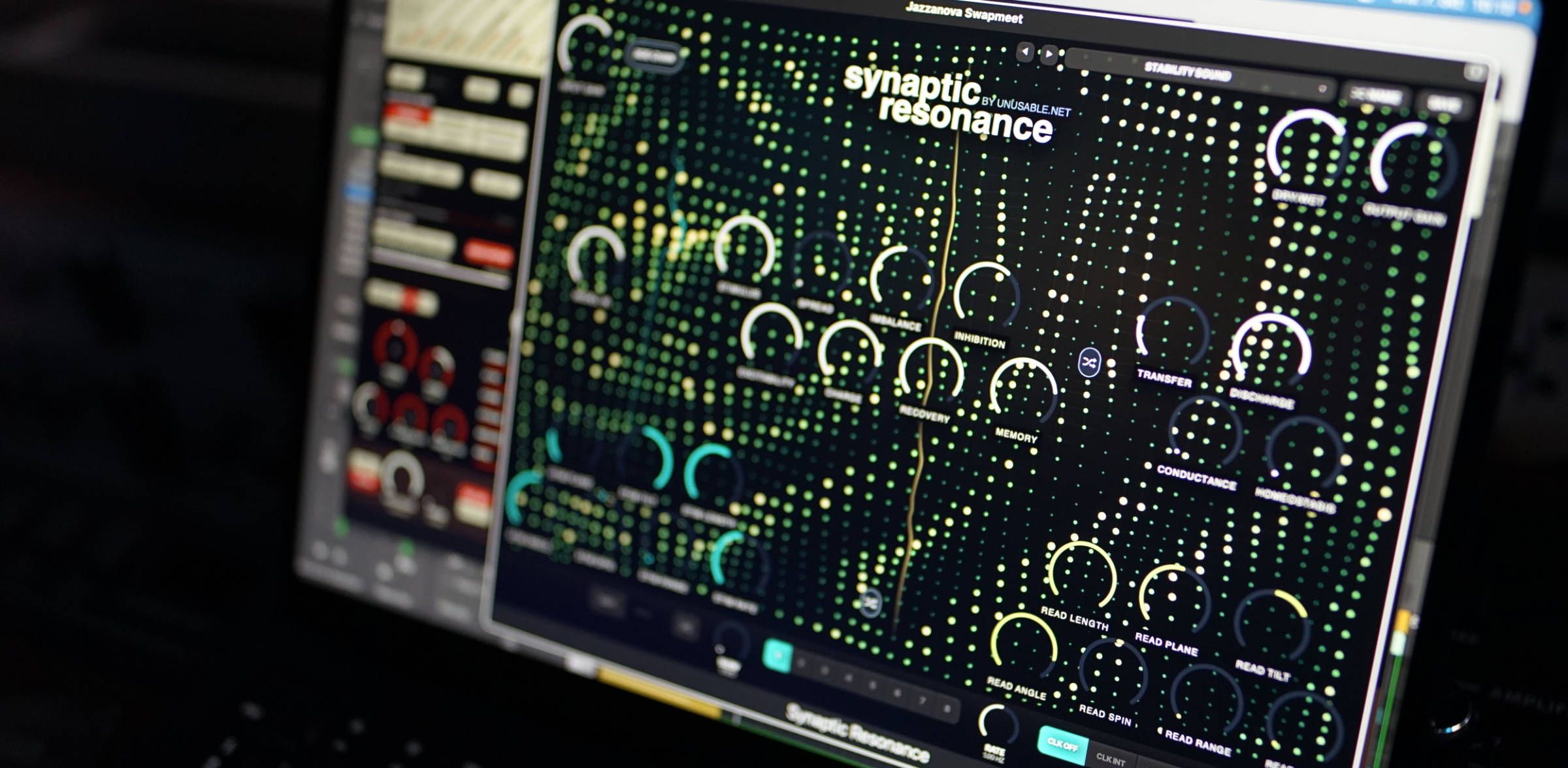
Synaptic Resonance
The CPU hog that is more of an art piece than an everyday-use plugin.
I started cleaning up some CPU-heavy processes to make it run a bit more smoothly. The neural simulation is heavy by nature, so there is a limit to what can be done without changing the sound.
While playing with it, I realized it would be fun to add Length to both the stimulator and read planes.
Instead of triggering or reading neurons across the full neural lattice, they can now work over a shorter span.
That can let bass affect mids, let neural activity burst from a smaller center area, or simply leave more of the lattice to do its own talking.
Not a huge change, but it widens the use a bit.
And yes, you can sequence Length with the slot sequencer.
Grain Discharge
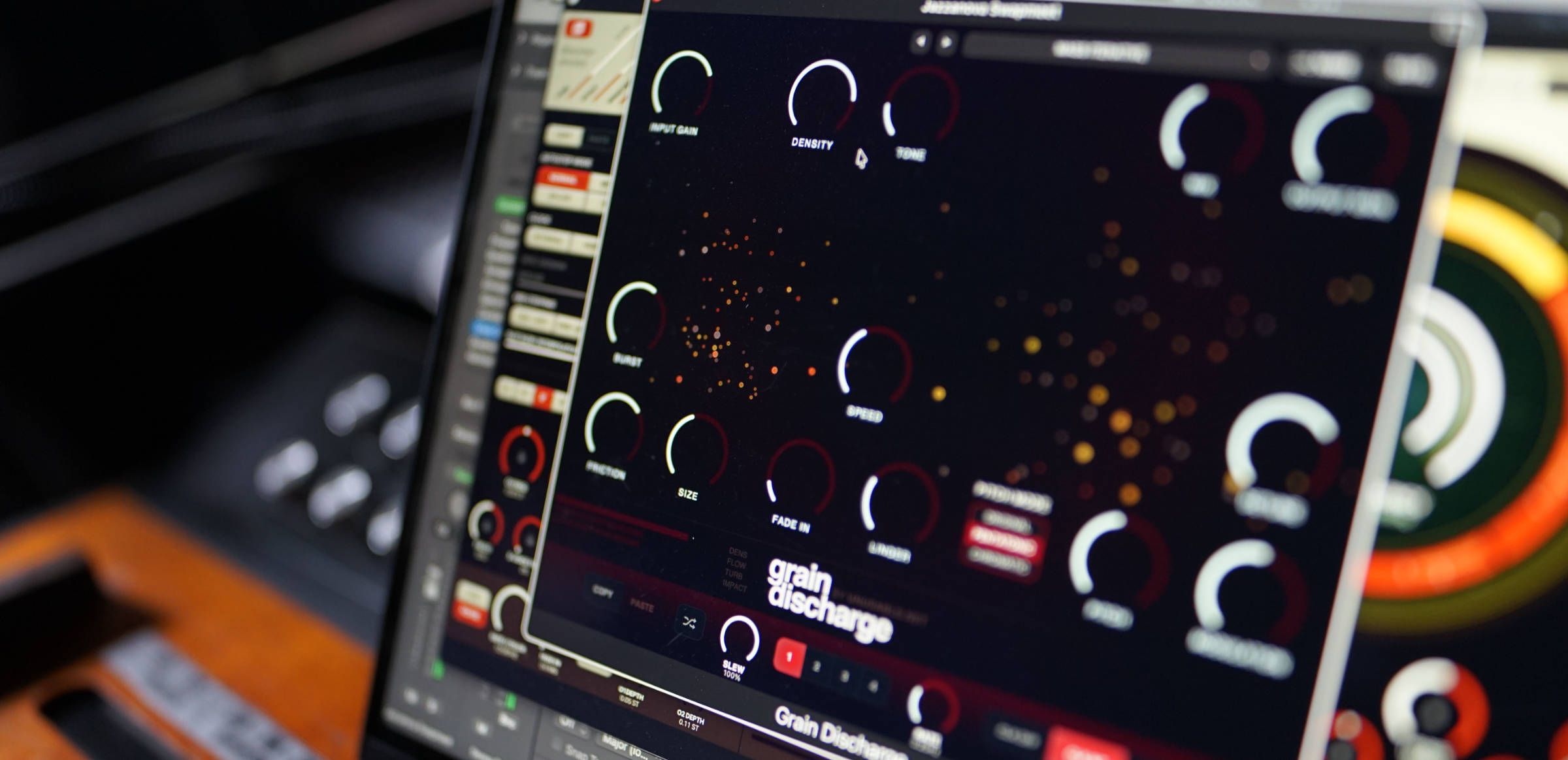
One of the decisions in the original design was to use only sevenths and octaves for the pitch-shifted grains.
I did not have any Unusable Engineering reverb in the lineup back then, and I think that made me aim for grain clouds with that sweet harmonic nature.
With this update I have added two more pitch modes.
Pentatonic spreads the grain pitch shifts over a pentatonic scale.
Chromatic spreads them over a chromatic scale.
The pitch mode is a global setting and is therefore not part of the slot-sequencer parameters.
Both new modes can generate denser clouds, which is fun to run through other effects.
Truth be told, it is not a huge change in any way, but nice.
Harmonic Dissector
The last update brought Smooth Mode.
This time I went dirtier again.
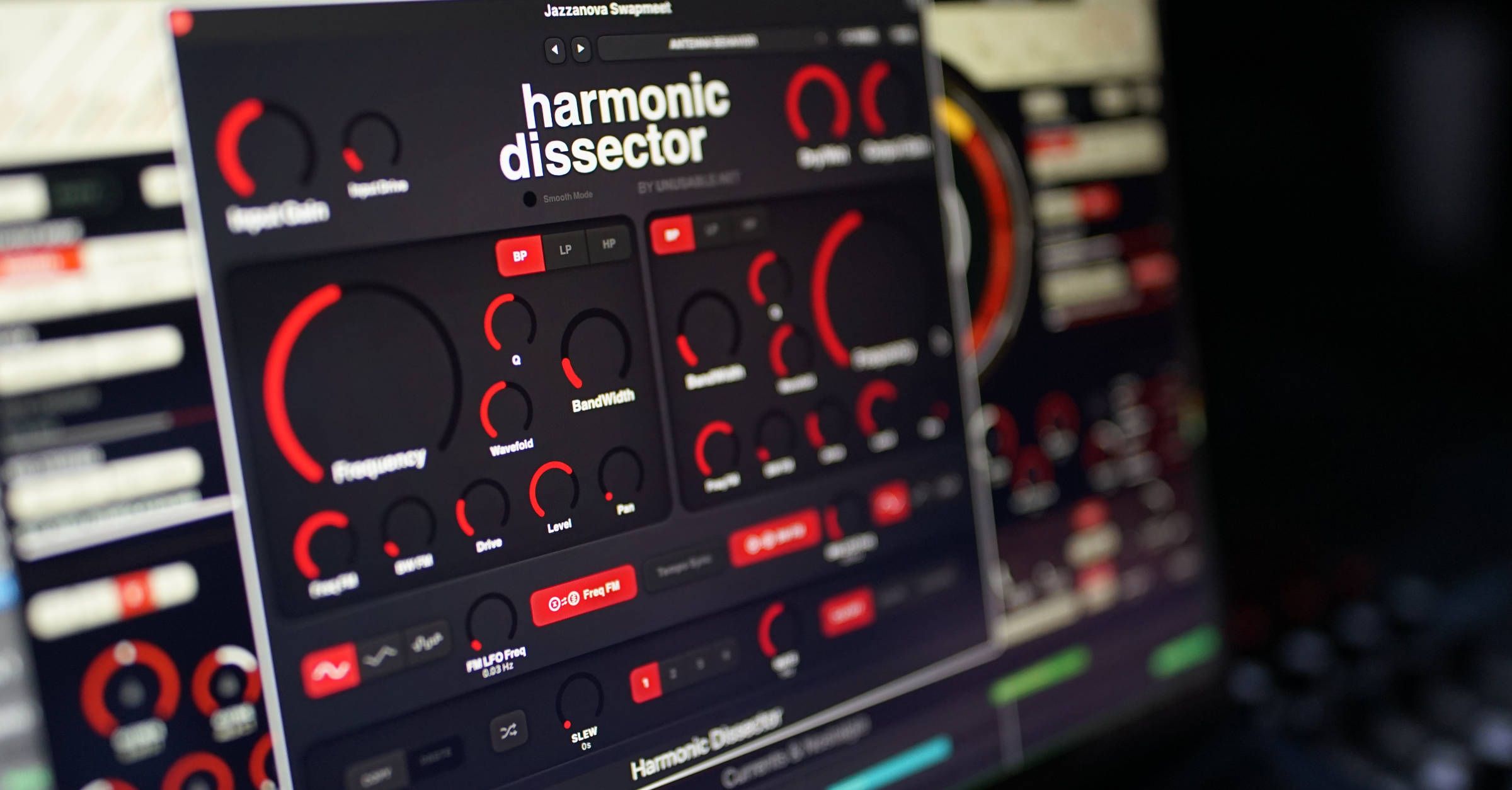
Both filters now have a new Wavefold control. Depending on the setting, it folds the incoming audio to different degrees and with different numbers of folds.
The wavefolder is placed before the filter, so it can add extra distortion before the filtering.
It is part of the slot sequencer, so you can generate sweeping or stepping distortion patterns.
Whooo, exhausting read…
I hope you find some new uses for the effects.
Synth updates
There has also been some work on the synths, although nothing that changes their sound engines.
Curves & Membranes
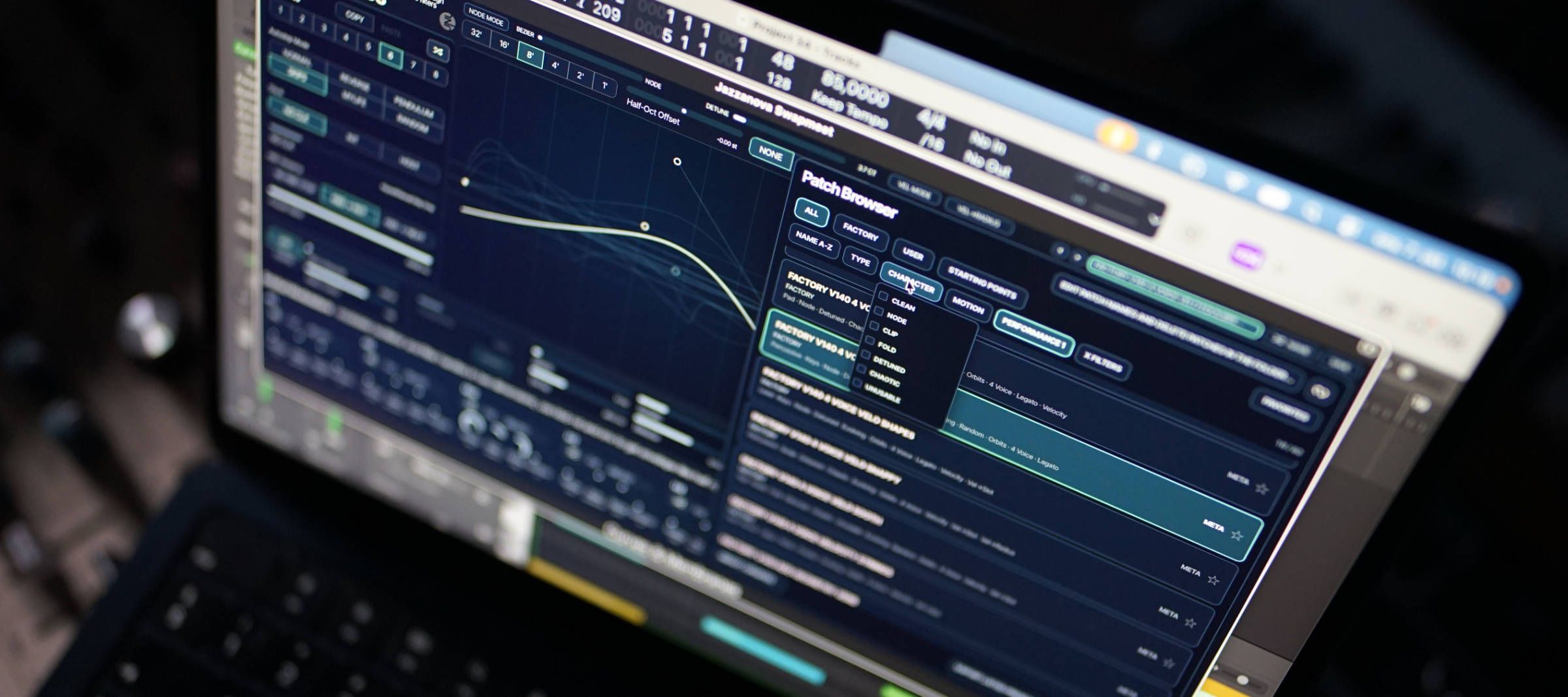
I made a minor fix to handle/node live recording and ported over the extended preset system that was added to Partials & Discrepancies in the last update round.
When you run the new version for the first time, I suggest clicking Refresh in the preset browser. It will automatically tag your existing presets.
Partials & Discrepancies
A small function has been added to the preset system, and it is in Curves & Membranes too.
If you have a filtered view, for example a bank or a selection, a button appears at the bottom of the browser that lets you create a ZIP file containing the current preset list.
The top-right corner of the browser also shows how many presets are currently listed out of the total.
I also brought over a workflow function from the coming synth, Currents & Nostalgia.
You can now navigate the slots with the arrow keys:
- Left / Right: step between slots
- Down: activate/deactivate a slot
- Up: solo/unsolo a slot
The slot sequencer you edited most recently owns the keyboard controls.
It makes it much quicker to navigate the slots or just check their settings.
All updates should be available on your account page now:
Currents & Nostalgia
That was the current update round.
My main focus is now on the coming synth.
The release is planned for November, and I am extremely happy and proud of it.
It is my take on a classic analog-style architecture focused on quick workflow, great sound and two slot sequencers.
I am personally very fond of simple, straightforward synth designs like the Prophet-5.
There was something magical in instrument design before I got the ability to continuously add more features to a microprocessor. You had to nail a great feature set from the start, and as an instrument you learn to work within those constraints.
If you know my instruments, you probably know that I have this in mind when building them.
With Currents & Nostalgia I have tried to build a classic six-voice polyphonic synth from a parallel timeline.
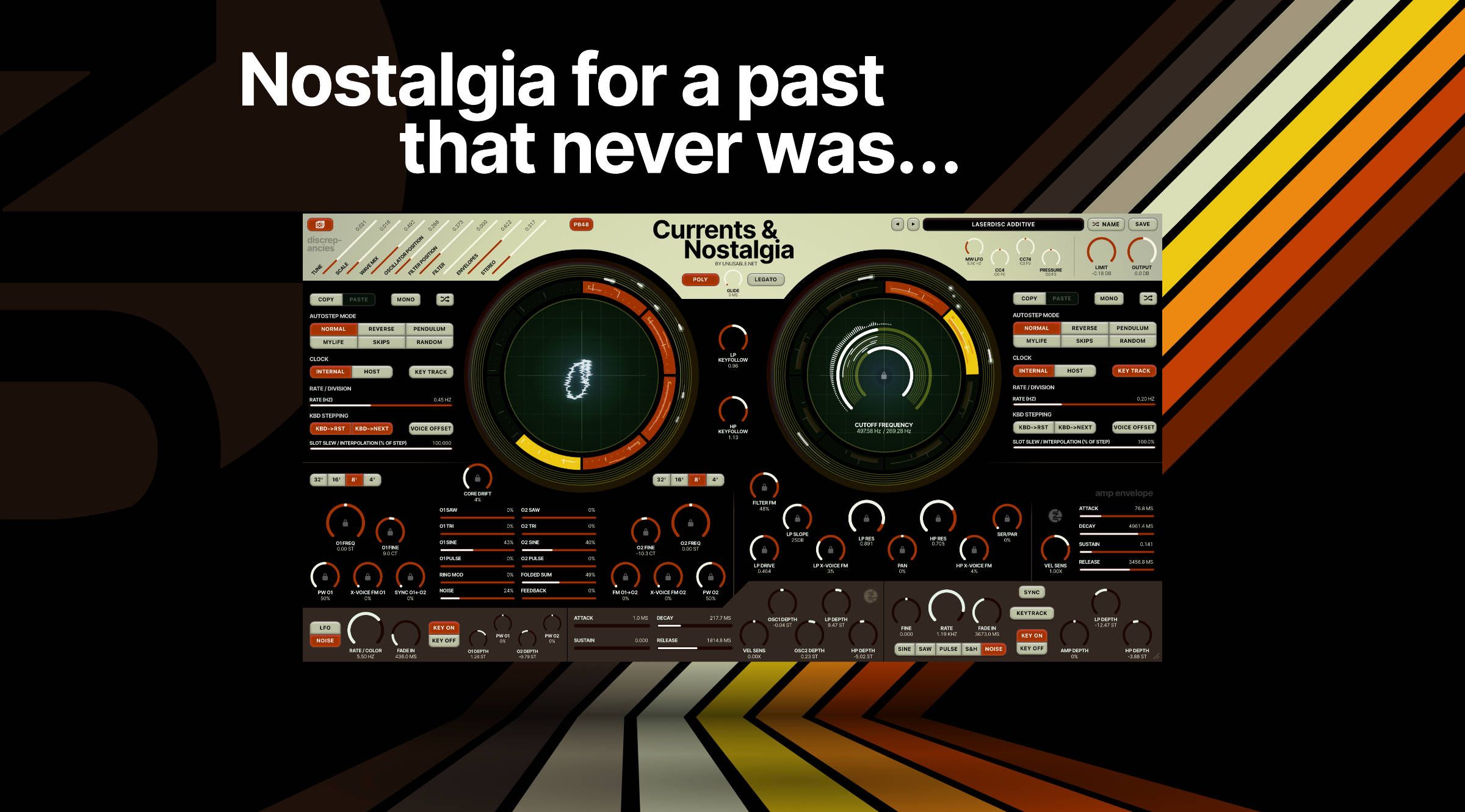
It can do most of the classic synth sounds, but with the slot sequencers it can go far beyond the usual limitations of that architecture.
I am still making presets for it. I have around 200 as I write this.
I have realized that not all Unusable Engineering users are synthesists, so I need to make sure there are enough quality presets for anyone to find good starting points for final adjustments.
It is still very much a synthesist’s instrument. It gets to good results quickly and sometimes offers some fun surprises.
There are some videos if you want to hear it. One of them also shows the workflow:
First preview of the coming synth - no talking
Second preview of the coming synth, with talk
38 edgy presets - no effects, no talk
Well, that was the plugin updates and a bit of status on the coming synth.
If you stayed with me this far, I hope you got something out of it.
I will likely make another post in a couple of weeks with a bit more information about the release date, price and discounts for Currents & Nostalgia.
Until then, I wish you the best of times, and I hope you have time to play around with the Unusable Engineering lineup.
All the best,
Rasmus Nyåker