Signal path and echoes
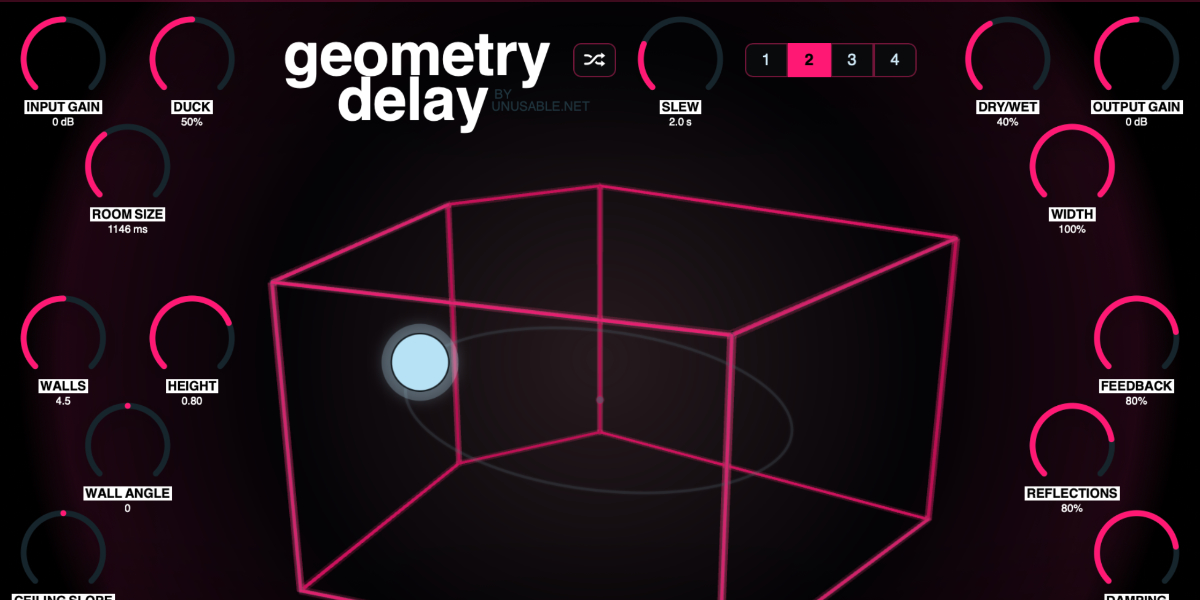
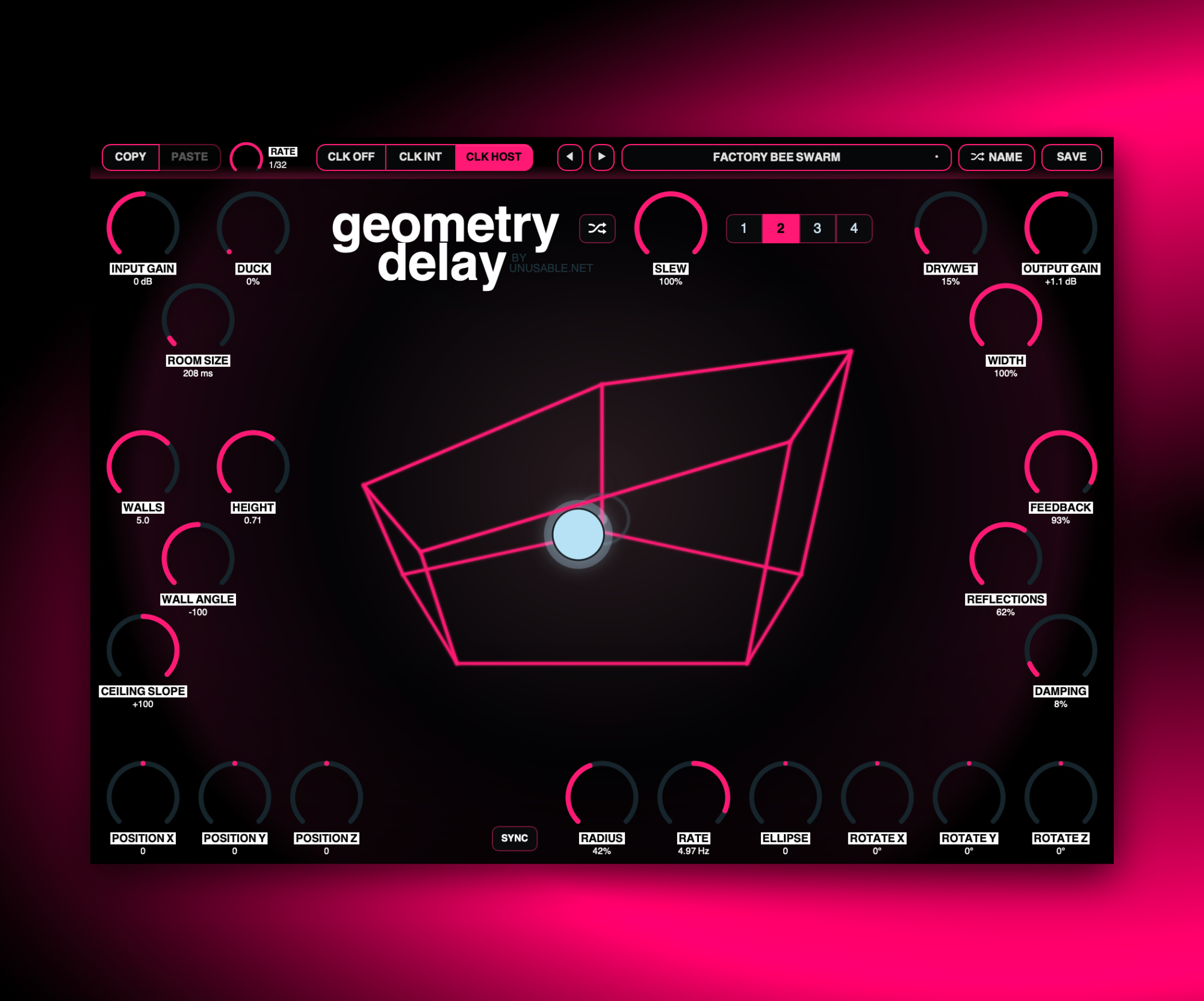
The input feeds a set of independent delay paths. Each active wall is one tap, with separate floor and ceiling taps completing the room. The room is a control model rather than an acoustic simulation: a repeat represents the complete node-to-surface-to-node journey, and each tap recirculates through its own feedback loop.
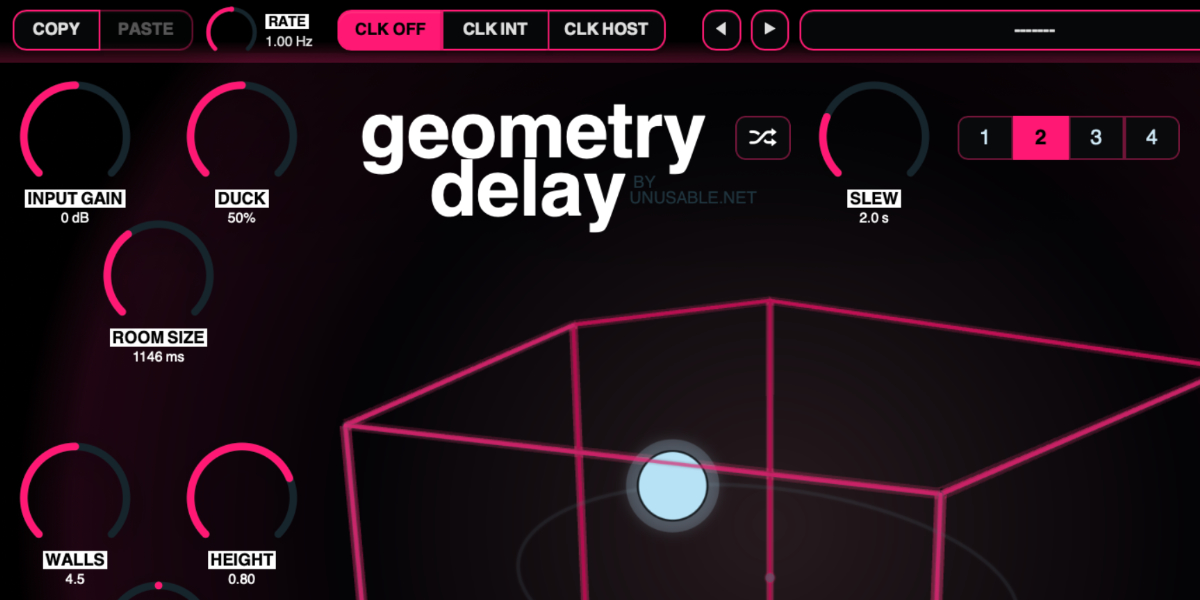
Input Gain sets the level entering the delay. The center position is unity gain, with attenuation to the left and boost to the right.
Feedback sets the amount returned independently through every tap. Higher values create more repeats without mixing the taps into one shared feedback delay.
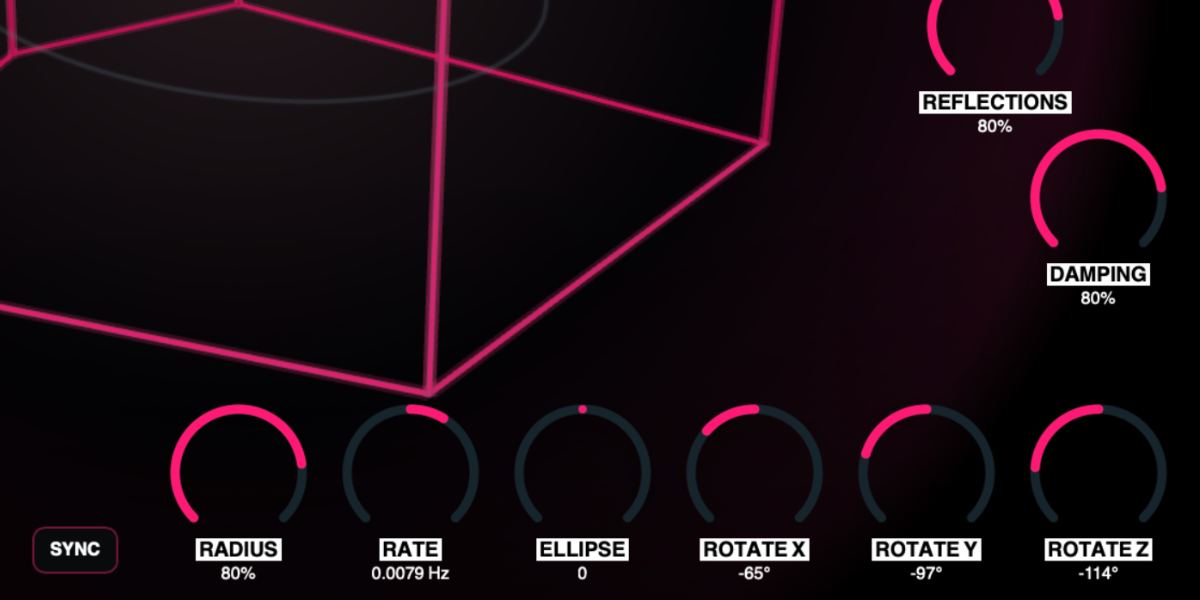
Reflections sets the audible level of the individual room taps. It changes how strongly the surfaces return sound, while Feedback controls how long those returns continue.
Damping darkens and slightly attenuates the repeated signal inside each feedback path. Higher values remove more high-frequency energy on successive repeats.
Width scales the stereo spread created by the tap positions.
Duck reduces the wet signal while new input is present, then lets the echoes rise as the input envelope falls.
Dry/Wet crossfades between the original input and the complete multi-tap output.
Output Gain sets the final plug-in level. The center position is unity gain, with attenuation or boost available around it.