Signal path and modes
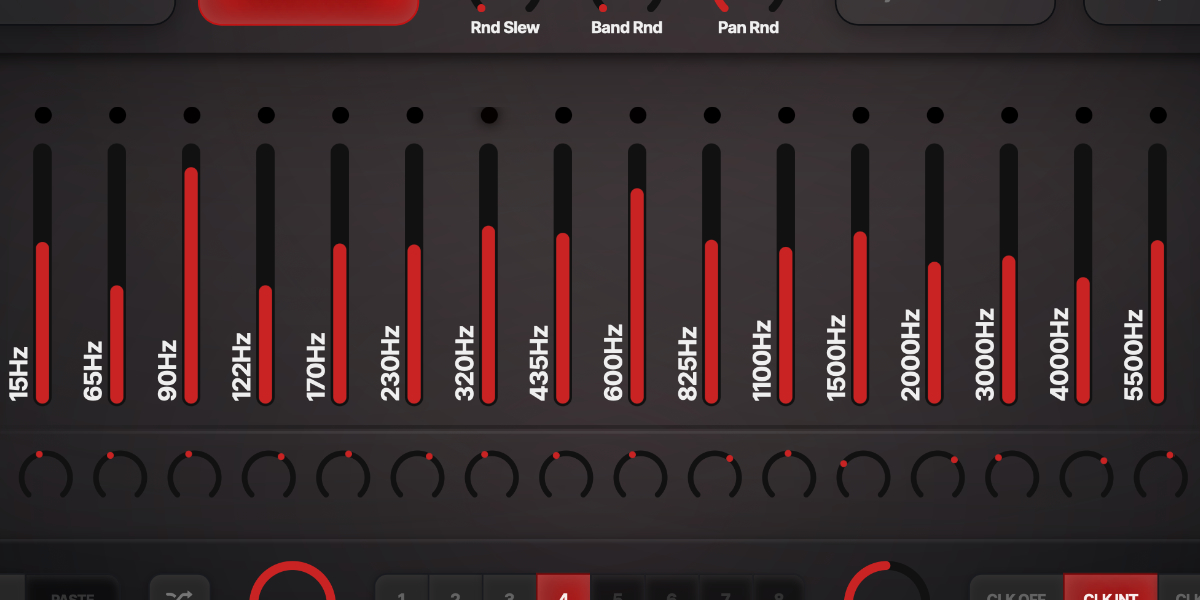
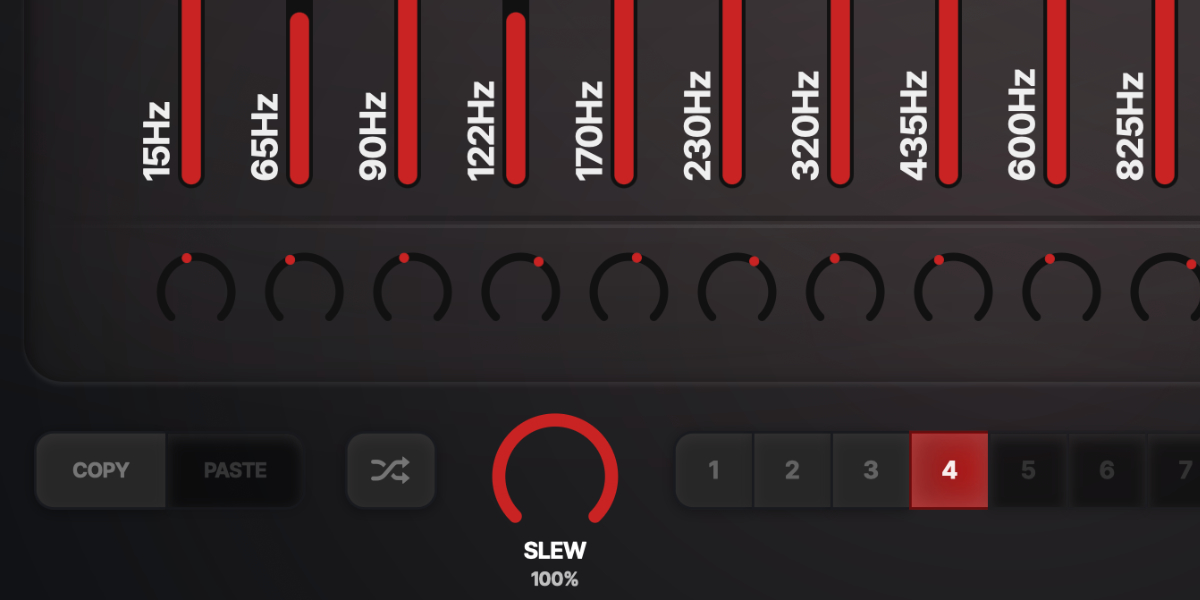
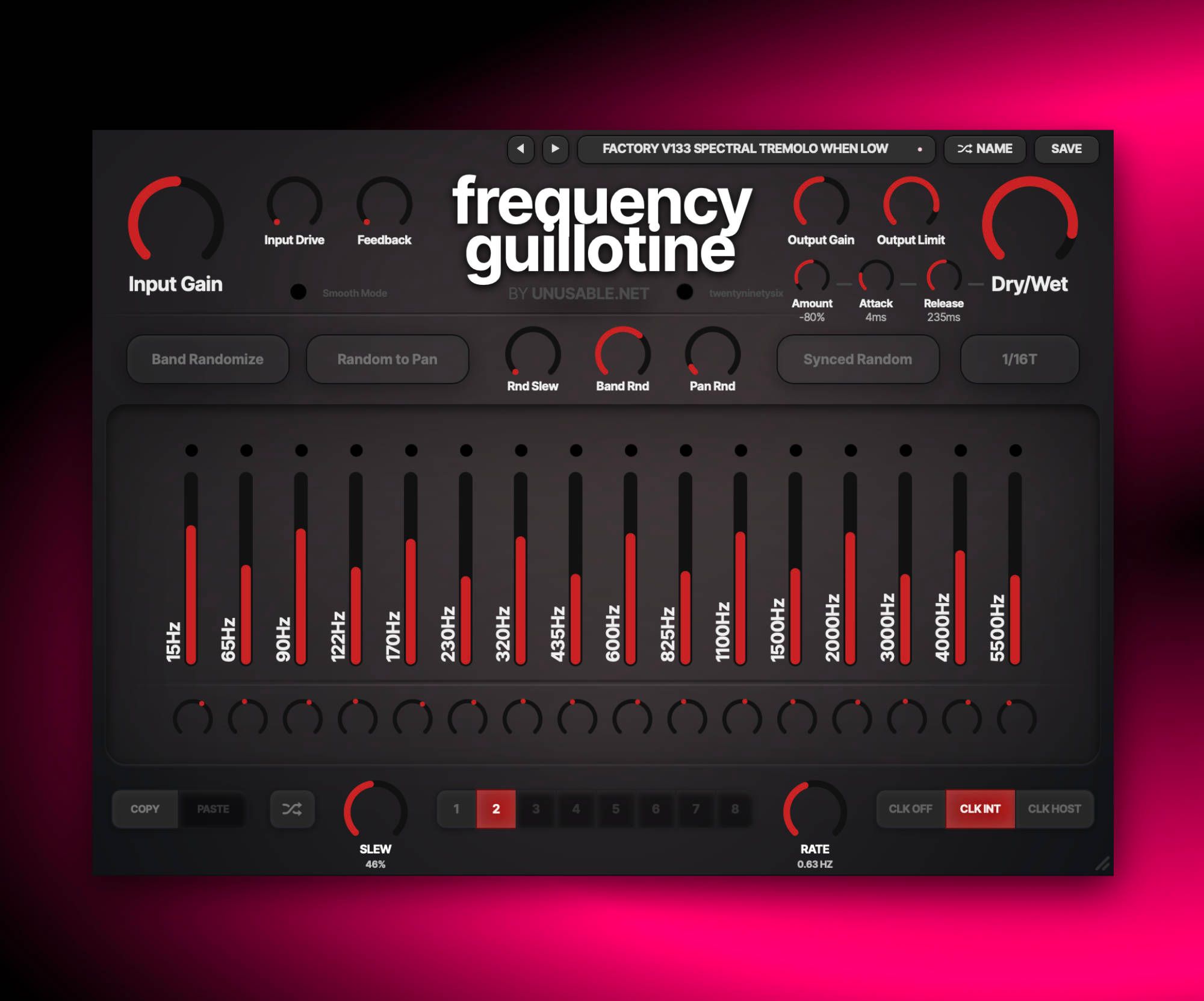
The mono input passes through gain and drive, enters the parallel filterbank, and is rebuilt as stereo from the 16 level and pan settings. Output gain, limiting, and the Dry/Wet mix follow the bank.
Input Gain sets level before saturation and the filterbank.
Input Drive increases input saturation before the signal is split into bands.
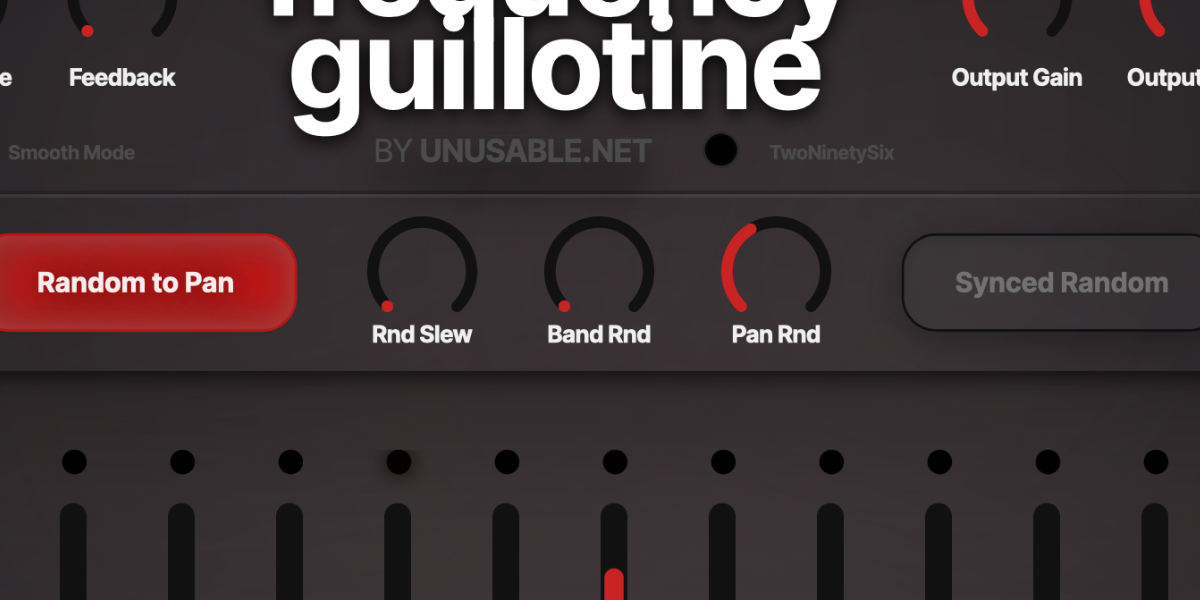
Feedback returns the summed filterbank output to the mono input. Higher values increase resonance, density, and the chance of self-sustaining tones.
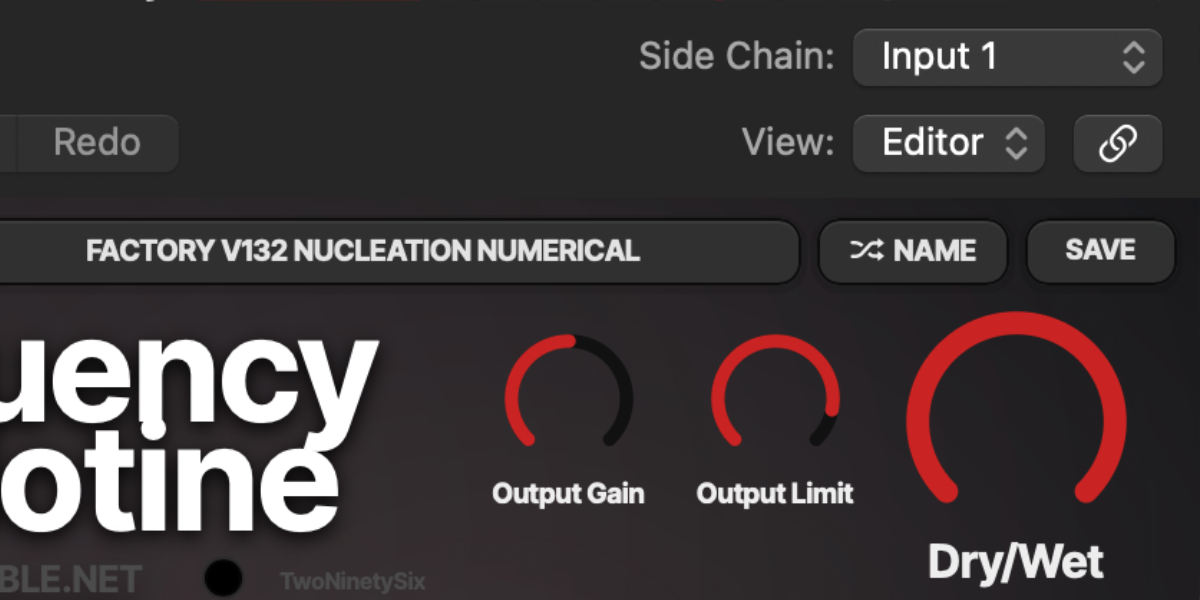
Output Gain sets level after the filterbank.
Output Limit sets the threshold of the final soft limiter.
Dry/Wet crossfades between the unprocessed input and the stereo filterbank output.
Amount is a bipolar control that adjusts the envelope follower's effect on the Dry/Wet mix. You can see its effect on the arc around the dry/wet control.
Attack sets the speed at which the envelope follower responds to changes in the input signal.
Release sets the speed at which the envelope follower releases after the input signal falls below the threshold.
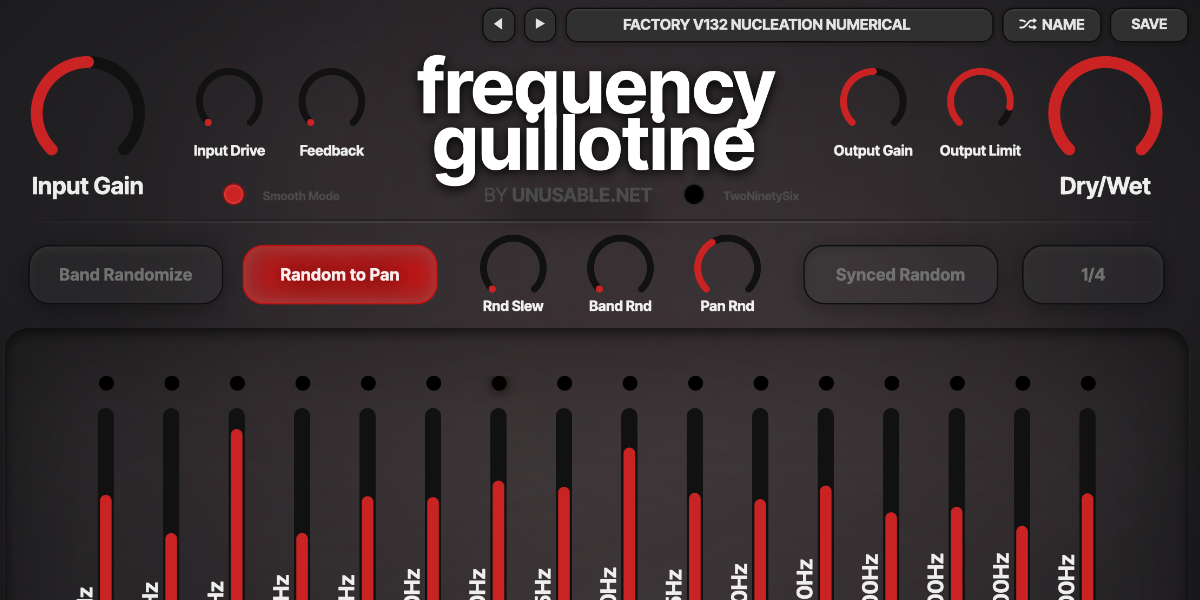
TwoNinetySix switches both the audio and sidechain banks to centers at 80, 150, 250, 350, 500, 630, 800, 1000, 1300, 1600, 2000, 2600, 3500, 5000, 8000, and 11000 Hz.
Smooth Mode changes the saturation and limiting curves, reduces the filter slopes from 48 to 36 dB/octave, uses the lowest and highest bands as low-pass and high-pass filters, and maps the positive band range to a softer maximum of +18 dB.